Archive
A practical history of Stone Island badges
You do not need to be an archive collector to benefit from the history. Knowing which styles came first and how newer variants differ makes it easier to choose the right replacement badge today.
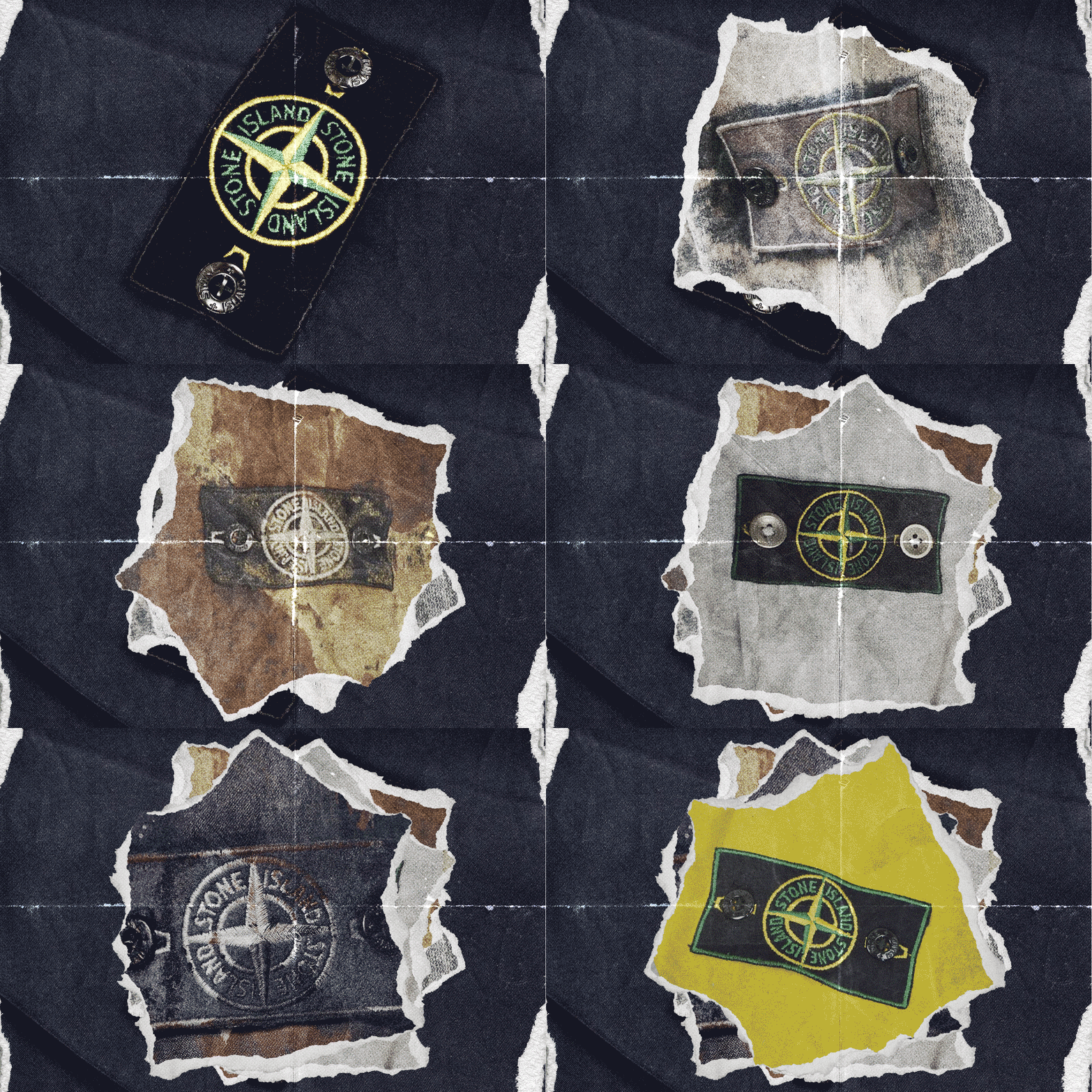
Why the compass badge matters
The compass badge became the quickest visual marker for Stone Island garments. For buyers today, it also acts as the baseline reference for colour, shape, and finish when comparing replacement badges.
That is why classic badges stay central even when more experimental styles get attention.
How the variants evolved
The classic yellow-on-black badge remains the anchor. Ghost variants pushed the badge toward tonal minimalism, while thermal and technical styles moved the badge into a more experimental lane.
- Classic: recognisable and closest to the original reference look.
- Ghost: quieter, tonal, and less contrast-heavy.
- Thermal: technical and more niche, driven by colour shift or material response.
Why history still helps replacement buyers
Most buyers are not building a museum-level archive. They just want the right badge for the garment they own. The history matters because it helps you avoid ordering the wrong style for the wrong piece.
_1.webp&w=3840&q=75)
.webp&w=3840&q=75)
